
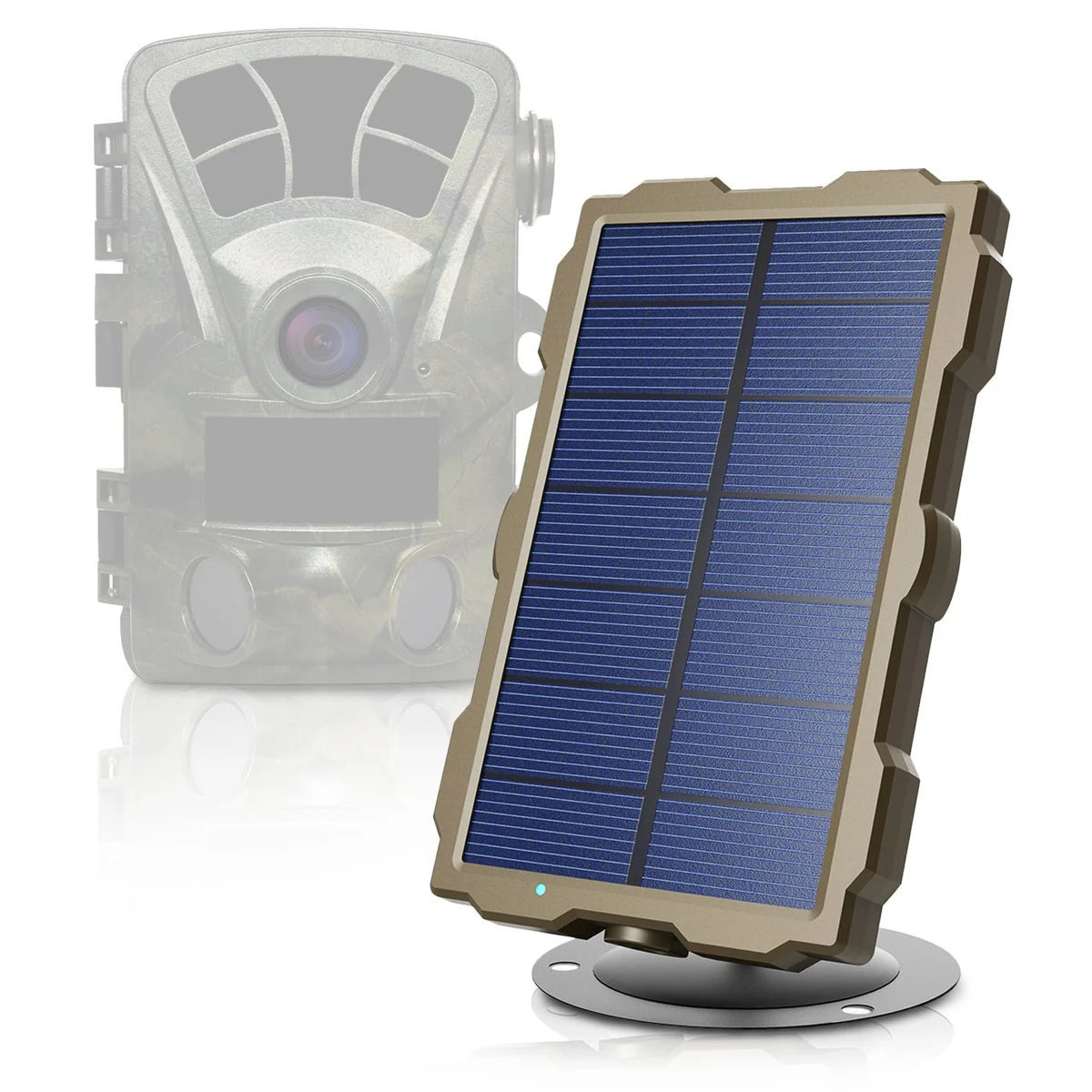
The published specifications and an important distinction
| Feature | Documented information |
|---|---|
| Rated output on the listing | 6V, up to 1.5A / 9W |
| Solar charging figure | 1.5W maximum |
| Integrated battery rating | 6V, 1700mAh lithium-ion |
| Listed USB charging input | 5V, 500mA |
| Installation hardware | Swiveling bracket and approximately five-foot cable |
| Named Rexing compatibility | H1, H2, H3 and H6; verify exact revision |
The headline uses IP66 while the detailed specification says IP56. Ask Rexing to resolve the rating for the supplied unit. The listing also asks for a full USB charge before first use. We do not treat its annual-operation or photo-count promises as independently established results.
Output power is not solar harvest
The 9W output rating and 1.5W solar charging figure describe different parts of the system. A battery can supply a short period of higher output than the panel replenishes at that instant. That does not make the higher number a continuous all-day solar yield. The practical question is whether energy collected over time keeps ahead of the camera's workload.
The listed 6V and 1700mAh multiply to approximately 10.2Wh as a rating-based calculation. That is not a measurement of energy available at your camera connector. Conversion losses, operating limits and conditions can reduce usable output. We cannot calculate a trustworthy number of camera days without measured consumption and charging data for the actual arrangement.
Make compatibility a written check
Begin with the camera manual and its exact model number. Confirm output voltage, polarity, plug dimensions, current requirement and the camera manufacturer's instructions for internal batteries while using external power. A plug that fits mechanically can still be wrong electrically. An adapter cable alone does not establish that the source is suitable.
This matters even within Rexing's lineup. Some current store statements and older manuals use different external-power wording. Ask support to identify the approved camera/panel combination rather than selecting a number that happens to match. Our battery and solar guide explains why a familiar battery format or connector should not substitute for a compatibility check.
The best tree for a camera may not suit a panel
A camera needs a useful view of the subject. A panel needs useful exposure to the sky. Those requirements can pull the installation in different directions. Examine the intended cable route and the changing shadows before deciding that one mounting point can serve both pieces of equipment. Do not sacrifice the camera angle solely to place its panel higher.
Use the supplied bracket and keep the cable secure without pulling on the camera connection. Leave enough service access to open the camera safely, and follow the accessory instructions for sealing and strain relief. Check the installation again after the first weather event. A power accessory that makes ordinary card service awkward can create a new maintenance problem.
Run a modest workload before extending the service interval
Start with a fully prepared power bank and a camera whose recording setup you already understand. Check the system frequently at first and keep a log of sunlight conditions, settings and activity. A series of quiet days cannot prove how it will behave during frequent nighttime recording or a stretch of shaded weather.
If the camera becomes unreliable, reduce uncertainty before adding hardware. Confirm the supply connection, inspect whether files are being saved and note whether problems occur after dark. Change one variable at a time. Longer clips and more events create a different workload, so compare like with like when evaluating whether the accessory reduced your own service visits.
When does it make sense?
The panel is a reasonable candidate for a compatible 6V installation with a good solar position and a clear reason to reduce battery handling. It is less convincing under persistent shade or where the connection requirements remain uncertain. A conventional approved power arrangement may be the simpler baseline while those questions are unresolved.
Include the accessory, any approved cable, mounting and continuing site checks in the total cost. The right outcome is a documented improvement in your own service routine, not a theoretical promise of unlimited power. Confirm current specifications and the unresolved protection rating with Rexing before committing an unattended installation to it.
Straight answers
Frequently asked questions
Does universal mean it works with every trail camera?
No. Rexing names several compatible models, but voltage, connector, polarity, current and exact camera instructions must still match.
Is it a 9W solar panel?
The listing describes up to 9W output but separately gives 1.5W maximum solar charging. Those ratings are not the same measure.
Will it keep my camera running all winter?
We have not established that. Results depend on the camera workload, sunlight, site and the accessory's operating limits.
Which weather rating applies?
The product page uses both IP66 and IP56. Confirm the rating of the supplied unit with Rexing rather than assuming the higher claim.
Sources & verification
Sources checked October 29, 2026. Product revisions, service terms and seller offers can change. Source observations are not our own test results.
How we research reviewsMore from the journal