
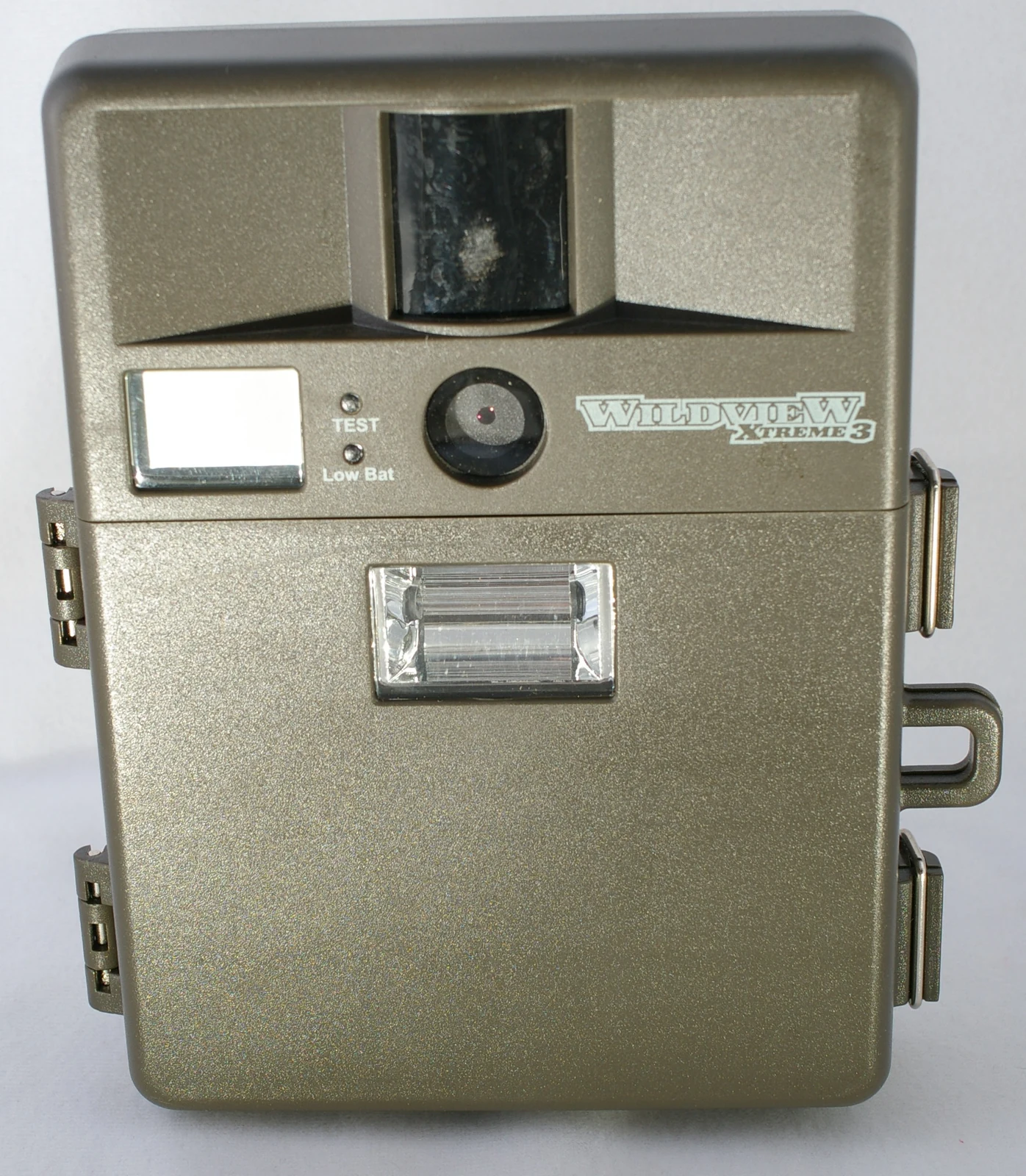

The short answer: detection and photography are separate jobs
A trail camera waits in a low-power state, detects a change in its monitored area, wakes its imaging system, and records a photo or video. A cellular model then adds a separate delivery step. Understanding these jobs makes it easier to diagnose a missing animal, a blank picture, or a photo that never reaches your phone.
The most useful distinction is between the detection zone and the camera field of view. One describes where the sensor can notice a subject. The other describes what the lens can photograph. They need not cover exactly the same space. An animal can trigger a camera near the edge of detection and leave before the shutter records it.
What a PIR sensor actually detects
The passive infrared sensor, or PIR, responds to changes in infrared energy across its detection pattern. It is not a tiny video camera recognizing deer. A Fresnel lens directs that energy toward the sensor. Browning explains why an animal moving across the pattern is generally easier to detect than one approaching directly.
Think of a narrow trail crossing the camera's view. The animal moves from one part of the pattern to another, giving the system a changing signal. Pointing straight down the trail may keep an approaching animal in nearly the same portion of the pattern. A slight angle can provide more opportunity to trigger and more time in the frame.
Temperature contrast also matters. A heavily insulated animal against warm summer vegetation may be harder to detect than a larger animal against a cooler background. This is one reason a published maximum detection distance should not become your planned working distance.
Trigger speed, recovery time and delay are different
| Setting or specification | What it describes | Why it matters |
|---|---|---|
| Trigger speed | Time between detection and capture | Fast-moving subjects may leave the frame |
| Recovery time | How quickly another capture becomes possible | Following animals may otherwise be missed |
| Capture delay | A user-selected waiting period between events | Controls repetition but creates intentional gaps |
| Delivery interval | When a cellular camera sends stored files | Affects when you see the result, not when the animal passed |
Do not compare trigger speed without checking the capture mode. A photo specification does not establish video startup performance. Likewise, a short recovery time cannot overcome a long user-selected capture delay. Record your settings before blaming the hardware.
As a planning example, an animal moving at 10 feet per second travels 5 feet during a half-second startup. This arithmetic illustrates why framing matters; it is not a measured performance claim for any camera.
What determines useful photo and video quality
Megapixels describe output dimensions, not the entire imaging system. Lens quality, sensor performance, processing, exposure and illumination all affect whether you can identify an animal. Enlarging a file does not create detail that was never recorded. Compare original sample files where available, especially moving nighttime subjects.
During daylight, there is usually more light available for a shorter exposure. At night, infrared LEDs provide illumination on many cameras. Longer exposure can brighten a still scene while producing motion blur on a moving deer. A bright background and a blurred animal are therefore possible in the same image.
For video, consider startup, usable clip length, audio and movement together. A sharp still image says little about whether a camera records the beginning of a fast crossing. Build your buying questions around the event you want to document.
Storage happens before you open the app
Traditional cameras normally save files to a removable SD card. Some cellular cameras also use a card, while others use internal memory. Check the exact model rather than assuming every cell camera has a removable card slot.
Cellular delivery adds a network and cloud service to the capture workflow. The camera sends to the manufacturer's system; the app retrieves the material from that account. Moultrie's explanation describes this separation. A delayed app notification does not prove the camera triggered late.
Your diagnostic order should follow the same chain: did the camera detect, did it save, did it connect, did it upload, and did the app show the file? Checking one stage at a time is more productive than changing every setting at once.
Build a repeatable first test
Use a stable mount, a clear path, approved batteries and compatible storage. Walk across the frame at the intended animal distance. Review the first and last positions captured, then repeat after one adjustment. Test at night as well as by day.
Keep a settings log with date, placement, capture mode, delay and power source. This gives you a baseline when weather, foliage or activity changes. A controlled walk test does not reproduce every animal encounter, but it reveals obvious gaps before a long deployment.
Straight answers
Frequently asked questions
Do trail cameras record all the time?
Most scouting trail cameras record when their PIR detection system is triggered, rather than continuously. Some also offer time-lapse, scheduled capture or specialized live-view features. Check the selected mode and exact model. A time-lapse image can appear without an animal because its schedule, rather than motion detection, caused the capture.
Will a trail camera work through a window?
Do not rely on a conventional PIR trail camera behind ordinary window glass. The detection system is designed for a clear view of the monitored area, and SPYPOINT specifically advises against glass or plexiglass shielding. Night illumination can also reflect from the pane. Use an appropriate outdoor installation instead.
Why does my camera take pictures with no animals?
A subject may have moved out of the frame before capture, or the detection system may have reacted to changing conditions in the scene. Check for moving vegetation, an unstable mount and time-lapse mode. Repeat a controlled walk test before assuming the sensor has failed. Change placement or one setting at a time.
Does a faster trigger always mean a better trail camera?
A faster trigger can help on a narrow crossing, but it does not guarantee sharp images, reliable detection or short recovery. Compare photo and video behavior separately. A well-aimed camera with suitable illumination and reliable power can deliver more useful evidence than a faster camera pointed at an unsuitable scene.
Can a cellular trail camera take photos without phone service?
Capture and transmission are separate operations, but offline recording behavior depends on the model, activation requirements and available storage. Verify those details in its manual. Do not assume a camera with internal memory gives you the same offline file access as a conventional camera with a removable SD card.
How should I test detection before leaving a camera?
Walk across the intended detection area in both directions, then inspect the files or confirmed uploads. Repeat at the near and far parts of the planned scene. Check framing, timestamps and whether the beginning of the crossing appears. A nighttime test is also necessary to evaluate illumination and reflections.
Sources & verification
Sources checked October 24, 2026. Product revisions, service terms and seller offers can change. Source observations are not our own test results.
- Browning: How a Motion/Heat PIR Sensor Works
- SPYPOINT: How the Detection System Works
- Moultrie: About the cellular camera system
More from the journal