
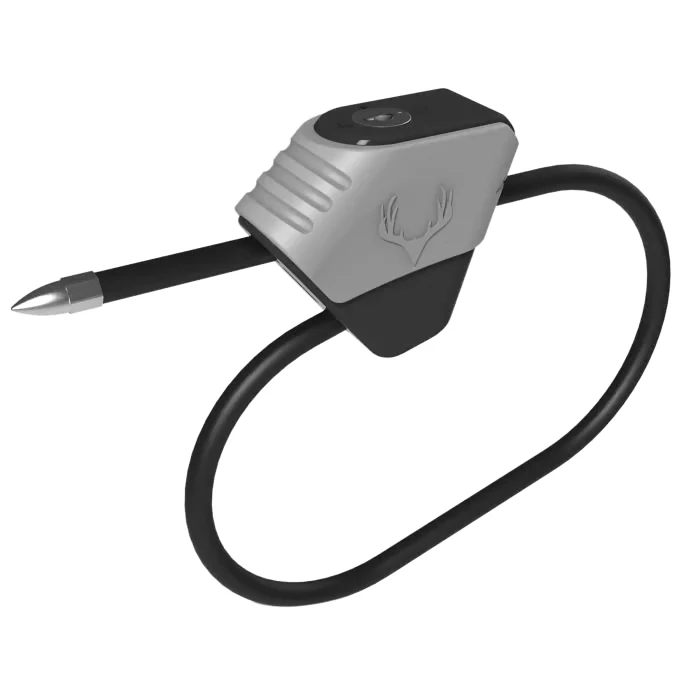
Identify the keyed CBLK correctly
The current HME product page identifies HME-CBLK. The supplied merchant identifies UPC 888151019788. A historical HME manufacturer catalog describes a 6.5-foot cable, a .315-inch diameter, two keys, a double-loop arrangement, an aluminum-alloy lock body and positions labeled Lock, Clinch and Unlock. The current web page provides little technical detail, so confirm those particulars on the package you receive.
Do not transfer specifications from HME-TCL, its three-pack or HME-TCCL. Those are separately identified coiled or combination products. The similar names matter because a different cable diameter or locking arrangement can change whether your camera can be secured as intended.
Measure the complete cable route
Before ordering, identify the camera or security-box passage the cable must go through. Measure its narrowest opening and allow for the cable end, not only the middle of the cable. A nominal diameter does not establish the clearance needed by every part of the locking assembly.
Trace the proposed route around the support and through the equipment. Include bends, offsets and space to operate the lock. A tree circumference alone understates the length consumed by a real installation. If a security box is involved, check whether the cable retains both the box and its removable section. The relevant fit belongs to that exact camera-and-box combination.
Keep security separate from aiming
Use the camera mount or strap to establish the viewing angle, then add the lock without pulling the housing away from that position. A cable that presses against a latch or hinge may complicate ordinary battery and card access. Discover that during a trial near home rather than at the end of a long property visit.
With the camera switched off, rehearse the normal service sequence: unlock, open the housing, reach the storage or power compartment, close it and secure it again. Check that the cable does not become trapped in the door seal. Operate the mechanism according to the supplied instructions instead of interpreting the position labels as a complete installation manual.
Plan how you will use the keys
A two-key package is only useful if the spare remains accessible when the field key is lost. Label the spare in a way that distinguishes this lock from the others you own, and store the identification record separately from the installed equipment. Do not assume separately purchased units are keyed alike.
Leave enough working clearance to insert and turn the key with the final camera mount in place. Think about the approach you will take during a wet or cold service visit. Do not add a lubricant or treatment merely because it suits a different lock; use the maker’s maintenance advice. We have no exposure test that establishes a reliable maintenance interval for this particular lock.
Where its value ends
A visible cable may discourage an opportunistic removal, but it cannot establish that a location is safe from deliberate theft or damage. Consider how easily someone can reach the camera, the support itself and any unprotected mounting hardware. A stronger-looking cable does not fix a detachable connection elsewhere in the arrangement.
The CBLK belongs on the shortlist when the exact cable path fits and keyed access is convenient. Compare a compatible security enclosure when protecting the housing and controls is also important. Record the camera’s identifying details before deployment and decide how much equipment you are comfortable leaving at the site. Those choices remain relevant after a lock is fitted.
Straight answers
Frequently asked questions
Is HME-CBLK a combination lock?
No. The reviewed CBLK is a keyed product. HME-TCCL is a separately named combination lock.
Will it fit every trail camera?
No universal fit was established. Check the full cable-end clearance and the camera or security box’s intended cable route.
Are separate CBLK units keyed alike?
Do not assume that. Confirm the exact package and keying arrangement with the seller.
Does the cable make my camera theft-proof?
No. It is a deterrent, and this review includes no destructive or certified security testing.
Sources & verification
Sources checked October 29, 2026. Product revisions, service terms and seller offers can change. Source observations are not our own test results.
- HME CBLK manufacturer identity
- Historical HME manufacturer catalog, mirrored PDF: CBLK versus TCL
- Ammunition Depot exact CBLK offer and UPC
More from the journal